What the “Live” Label Actually Tells You About a Casino Game
Understand what a live casino game label describes, how dealer-led tables compare with automated formats, and what to check before choosing a session.
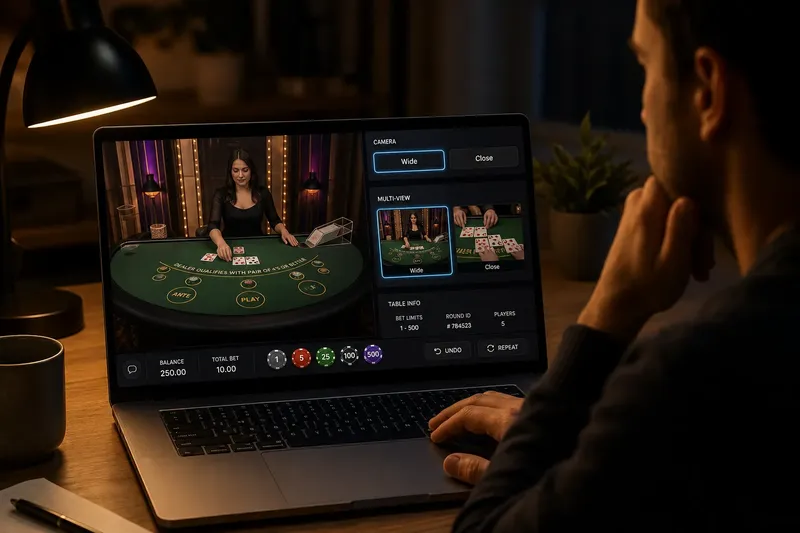
A live casino game label describes how a table is presented, not everything about how it operates. It usually points to a streamed, dealer-led format, but the specific table description is what tells you whether a person handles physical equipment and how remote participation is arranged.
What does “live” mean in a casino game?
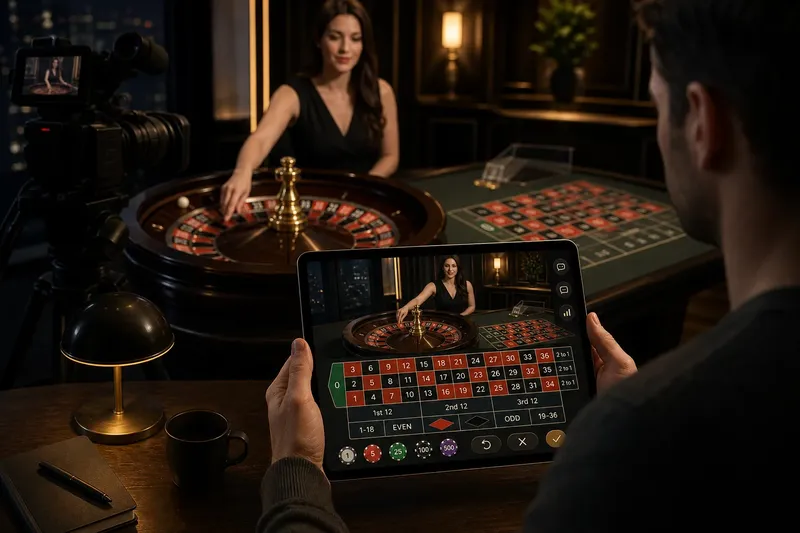
At a dealer-led table, a camera feed shows a person presenting a game, often with physical cards, a wheel or other equipment. Software alongside the stream displays the available choices and lets remote players take part.
That label distinguishes the presentation from a game shown entirely through animation. It does not, by itself, explain the rules, the equipment, the studio setting or the way your remote action is recorded.
Think of “live” as a label on a theatre ticket: it suggests a performance with people present, but the ticket alone does not tell you how the venue is arranged or what the programme contains.
How does a live table compare with an automated game?
A streamed table puts a dealer and, where specified, physical equipment in view. An automated game presents its round through software and graphics, without a dealer visibly handling the game on screen.
The distinction is about presentation, not a promise that one format is clearer, fairer or more suitable. A live feed can show what the camera captures; the table rules and published operator information explain other aspects of play.
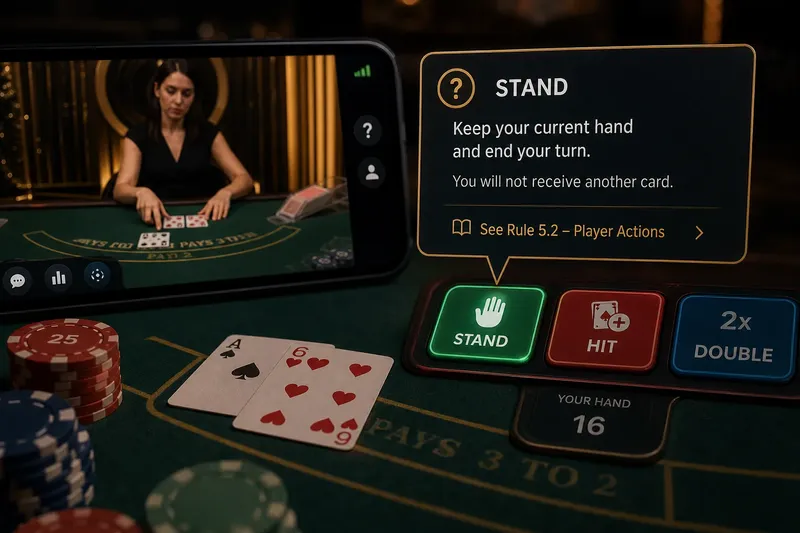
Remote participation is common to both formats. In either case, the interface is the route for selecting actions, and its wording should be considered separately from the label attached to the game.
What should you check before choosing a live casino game?
Compare the format description with what you want to see and understand. Each observation should lead to a clear choice, rather than an assumption based on the word “live”.
- Dealer and equipment: Check whether the description names a human dealer and physical cards, a wheel or other equipment. If it does and that presentation suits you, consider the table; if it does not, choose one with a clearer description or an automated format.
- Meaning of the label: Check whether the page explains what “live” refers to for that specific game. If it identifies a streamed dealer-led table, assess that format on its own terms; if it offers only a label, look for a fuller description before deciding.
- Game rules: Check whether the table’s rules explain how its round works. If they are accessible and clear to you, compare the game with your preferences; if they are missing or confusing, choose a table with rules you can understand.
- Remote interaction: Check how the description says players participate, including whether chat or other interaction is offered. If that arrangement fits what you want, keep it in consideration; if interaction matters and is not described, look for a table that states its options.
- Setting: Check whether the page describes a studio, a venue or another setting. If the stated setting matches what you expect, consider the table; if the setting is unspecified or important details are absent, avoid assuming the camera shows a public casino floor.
- Automated alternative: Check whether the same game or a similar format is offered as an automated version. If you prefer software-led presentation, compare that option; if seeing a dealer matters to you, favour a table whose description confirms one.
What do people ask about the live casino game label?
Does “live” always mean a human dealer?
The label is commonly used for dealer-led streams, but wording can vary between tables. Check the specific description for confirmation that a human dealer is shown.
Does “live” mean the game is played in a public casino?
No. A stream may come from a studio or another setting, and the label alone does not identify the location. Look for a description of the setting if that matters to you.
Is a live casino game the same as playing in person?
No. You view the table through a stream and participate remotely through an interface. The camera may show a dealer and physical equipment, but it does not make the remote experience identical to being at the table.
Does the live label explain the rules?
No. The label describes presentation rather than the full game structure. Read the specific table rules to understand the game and its available actions.
How would you compare two formats in practice?
Imagine you want to follow a roulette round, prefer seeing a dealer handle a physical wheel and do not need chat. You open a table description that confirms a dealer and wheel, then read its roulette rules; those details match your preferences, so you keep it in consideration. If the description instead says only “live” and does not identify the equipment, you compare an automated option or look for a dealer-led table with a fuller description. The resulting choice follows from the format information available, not from assuming the label tells you everything.
For a live casino game, treat the label as a starting point for identifying the presentation format. The specific description tells you what is shown, while the rules and setting details help you decide whether that format suits the experience you want.