How Interactive Casino Table Streams Turn Rules into On-Screen Play
Interactive casino table streams make rules easier to follow by connecting prompts with plain-language explanations, so viewers can understand each choice before acting.
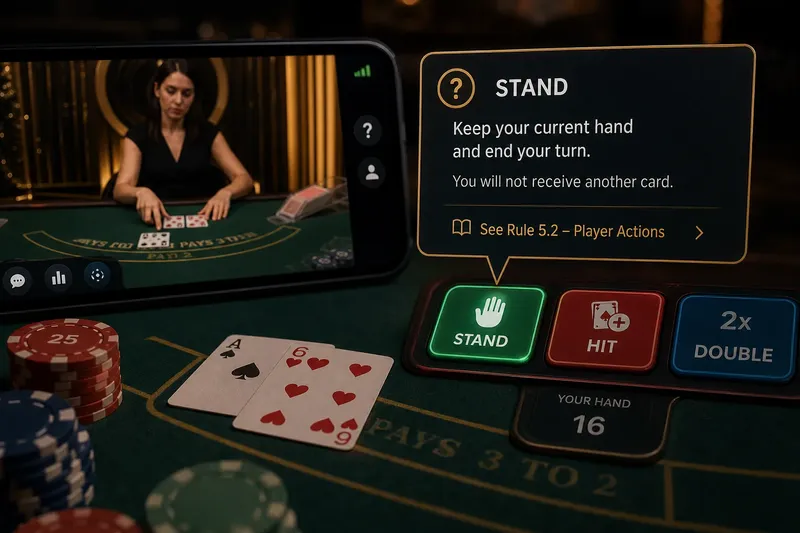
Interactive casino table streams depend on clear rule prompts: a player should be able to tell what an action means while the live hand is unfolding. A button labelled “stand” may be familiar, but the stream still needs to connect that term to the choice available in the game.
A prompt is a little like a label on a kitchen switch: its value lies in identifying what it controls, not in adding decoration. In a live table interface, the wording must also fit the changing moment on screen.
What should a rule prompt explain?
A useful prompt links the game term to its plain-language meaning and the decision currently open. Short wording can orient the player; a separate rules panel can explain conditions that do not fit beside a button.
The language should stay consistent across the prompt and the rules. If one calls an action “stand” and another uses a different term, the player has to infer whether they describe the same choice.
Where do explanations belong in a live stream?
The immediate explanation belongs near the choice, where it can be read without losing sight of the table. Longer detail can live in a help panel, provided the prompt points to the relevant rule rather than sending the player through unrelated material.
Timing matters too. An explanation shown before a decision opens, or left on screen after it closes, can blur the line between general instruction and a current action. The interface should make that distinction apparent through its wording and presentation.
How can prompts explain unfamiliar game terms?
A concise gloss can put specialist vocabulary into ordinary language, while the full rules describe how the term applies in that particular game. The prompt should explain the choice without implying that one option is wiser or more likely to produce a particular result.
For an editorial review of a stream, consider these concrete observations and decisions:
- Compare the button term with the rulebook: If both use the same term, assess the adjacent explanation; if they differ, check the full rule wording before treating them as equivalent.
- Read the gloss beside the choice: If it explains the unfamiliar term in plain language, assess whether it fits the current decision; if it merely repeats the label, consult the fuller rules.
- Identify the game state named in the prompt: If it matches the hand or round shown, assess the available choices in that context; if it does not match, treat the prompt as unclear and seek the game’s rules.
- Note whether the prompt is framed as current or general: If the wording makes that distinction clear, assess it accordingly; if not, do not infer that a general explanation is an active instruction.
- Follow any link to a condition or exception: If the detail explains a term used in the prompt, include it in your understanding; if the link leads elsewhere or gives no relevant detail, rely on the formal rules instead.
- Look at how the interface describes an action after selection: If its wording identifies what was selected, use that as the record of the interface’s response; if it does not, avoid assuming that an unclear screen state means the choice was accepted.
What do readers ask about rule prompts?
What should a tooltip explain?
A tooltip should define a term or control in plain language and show which rule it concerns. If it only repeats the button label, the full rules are needed to understand the choice.
How can a prompt explain options without steering a player?
It can describe what each available option does without praising one or predicting an outcome. Wording that sounds like advice should be distinguished from the game’s formal rules.
How should an interface present exceptions?
A prompt can signal that conditions apply and direct the player to the relevant detail. If an exception could change what a choice means, that detail should be accessible before the player acts.
How can a stream make the recorded action clear?
The interface can name the selected option in its response, making clear what it has registered. If its response is ambiguous, the player should consult the service’s instructions rather than infer what happened from the camera view.
How might a prompt shape one decision?
Say you open a streamed card game and see “stand” beside a hand. The prompt identifies that hand as awaiting a decision, and its help text says “stand” means keeping the current hand rather than requesting another card.
You compare the hand named in the prompt with the hand shown, then read the options. If the names match and the definition is clear, you can understand what selecting “stand” would mean; if the prompt names a different hand or lacks a definition, you have a concrete reason to consult the game rules before deciding.
What do clear prompts add to a camera game?
A camera presents the table, while the interface explains the rules behind a choice. Those are different jobs: a visible card or dealer’s movement may provide context, but it does not necessarily explain what a control means or which conditions apply.
When comparing interactive casino table streams, look at how the wording connects each prompt to its rule and to the moment on screen. The most useful interface is not the one with the most text, but the one that lets a viewer distinguish a game term, its explanation and the choice currently being presented.