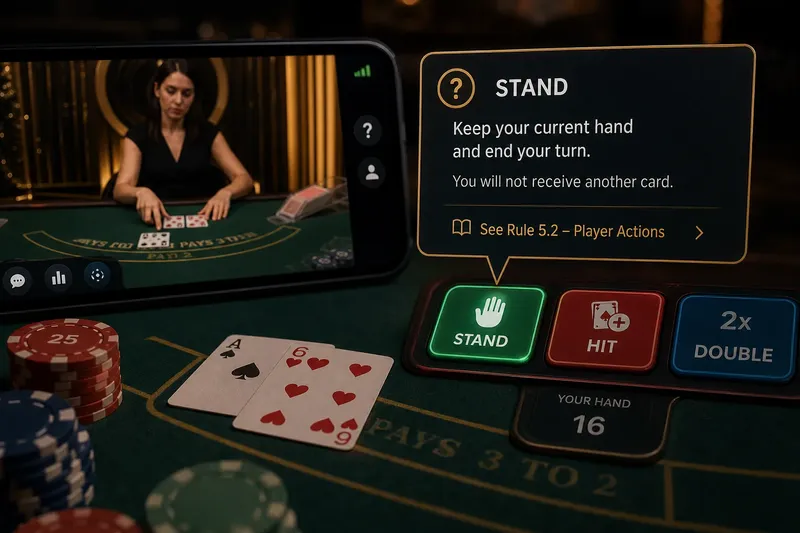
How Streamed Tables Present the Game Around the Camera Feed
Use this streamed table checklist to distinguish the game format, interface controls and table layout, so you can describe how a remote game is presented.
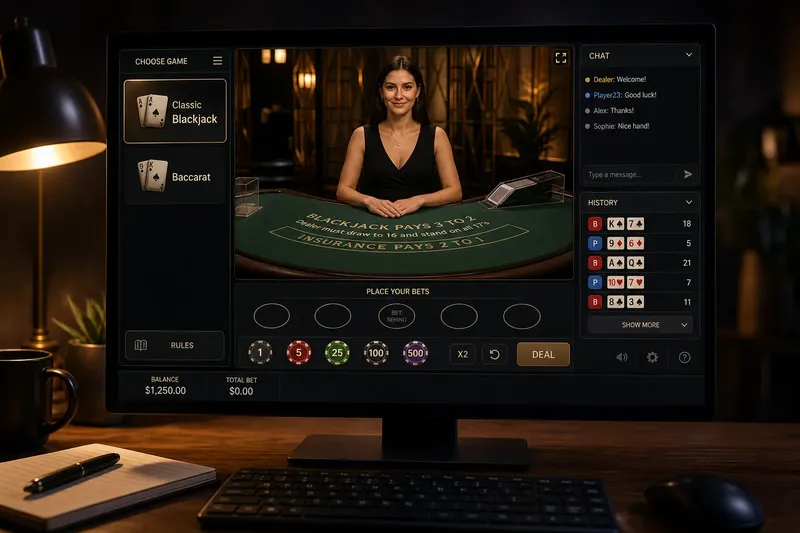
A streamed table is not just a video window: its layout shapes how a remote game is organised and approached. A dealer’s feed may sit beside a game selector, betting area, chat panel and rules link, each giving the player a different way to interact with the format.
Read the page as a working interface, not as a puzzle about what the camera can prove. A simple desk organiser is a useful analogy: separate compartments keep related items together without making them the same thing.
How does the page organise a streamed table?
Start with the main regions of the screen. The video area presents the table, while nearby controls may handle choices such as selecting an option, placing a wager or opening help. Their placement affects what a player notices first and how easily the parts of the game can be reached.
Look for persistent elements as well as pop-up panels. A game title may remain above the video while a rules window covers part of it; a chat column may be available without being central to play. Describe the arrangement in terms of its function and location, rather than assuming that a prominent element is necessarily important to the rules.
Which interface choices shape the format?
Several design decisions change how a streamed game is presented without changing its underlying rules. These include the position of controls, how options are grouped, whether instructions are always visible, and whether the page offers one table view or several presentation modes.
- Game selector: If the page groups several formats under a selector, then note how the choices are named; if no selector is visible, then describe the page as showing the current table without claiming other formats are available.
- Control placement: If the main controls sit beside the video, then describe that arrangement; if they appear below or in a separate panel, then note where the player must look to reach them.
- Rules access: If a help link opens an explanation, then identify where that explanation is reached; if the page offers only a short label, then record that the label does not provide the full terms.
- Table layout: If the interface displays marked betting areas or game options, then describe how they are grouped; if part of the layout is hidden or collapsed, then note what remains unavailable until opened.
- Optional panels: If chat or history can be opened and closed, then describe them as supporting panels; if they are fixed in the page, then note that they occupy a persistent part of the layout.
- View controls: If a menu offers alternate camera or display views, then name the available choices; if there is no such menu, then avoid suggesting that the player can change the view.
How should you describe controls and game information?
Separate what a control lets the player do from what the rules say about the game. A button can present an action, and a title can name a format, but neither necessarily explains how an option works. Use the information panel or the game’s own terms for rule details.
Pay attention to labels and their context. “History” might refer to previous rounds, while “help” may open a general explanation; the surrounding text and the panel itself determine what the control provides. If the label is ambiguous, describe its wording and location without assigning it a more specific function.
Imagine a page with a “Choose game” menu, a dealer video and a rules button. You open the menu and see two named formats, then open the rules button and find details for the selected one; your description can distinguish the available choices from the instructions that apply to the current selection.
What should you know about a streamed table checklist?
Does the page layout change the rules?
Layout alone does not establish a rule change. Check the game’s own information for terms, and describe the page arrangement separately from those terms.
What does a game selector tell me?
It shows which named choices the interface presents. Check whether selecting one also changes the rules panel or table information before describing what applies.
How can I tell what a control does?
Read its label and, where available, open the associated panel or help text. If the function remains unclear, describe the control as labelled rather than guessing its purpose.
Why note optional panels?
Panels such as chat, history or help can take up space or change what is visible on the page. Recording whether they are fixed, collapsible or opened separately gives a more useful account of the interface.
How can you make a useful page description?
Imagine a fictional table page with a video window, a “Choose game” menu listing two options, a rules button and a collapsible history panel. First, record the video window and its position beside the controls. Next, open the selector and list the two displayed names, without treating either as active until you make a selection. Then choose one option and open the rules button; note the selected name and the terms shown in the panel. Finally, open and close history to confirm that it is collapsible. The resulting description can state which controls are available, which format is selected and where its rules appear, while making clear that the second option remains unselected.
A streamed table checklist is most useful when each item leads to a clear description or a decision to leave something unspecified. Keep the focus on the interface’s organisation: it tells a reader how the game is presented and where its information and controls can be found.